
Today, comic books are everywhere. Superhero movies dominate the box office, graphic novels appear on school reading lists, and comics are recognized as a legitimate art form.
But there was a time when Americans burned comic books in the streets, politicians investigated the industry, and a bestselling book claimed that comics were turning children into criminals. The backlash became so intense that publishers effectively censored themselves for decades, ushering in one of the darkest periods in comic book history.
To understand how comic books ended up in the crosshairs of parents, politicians, and the media, we have to go back to where that fear began.
When America Burned Comic Books
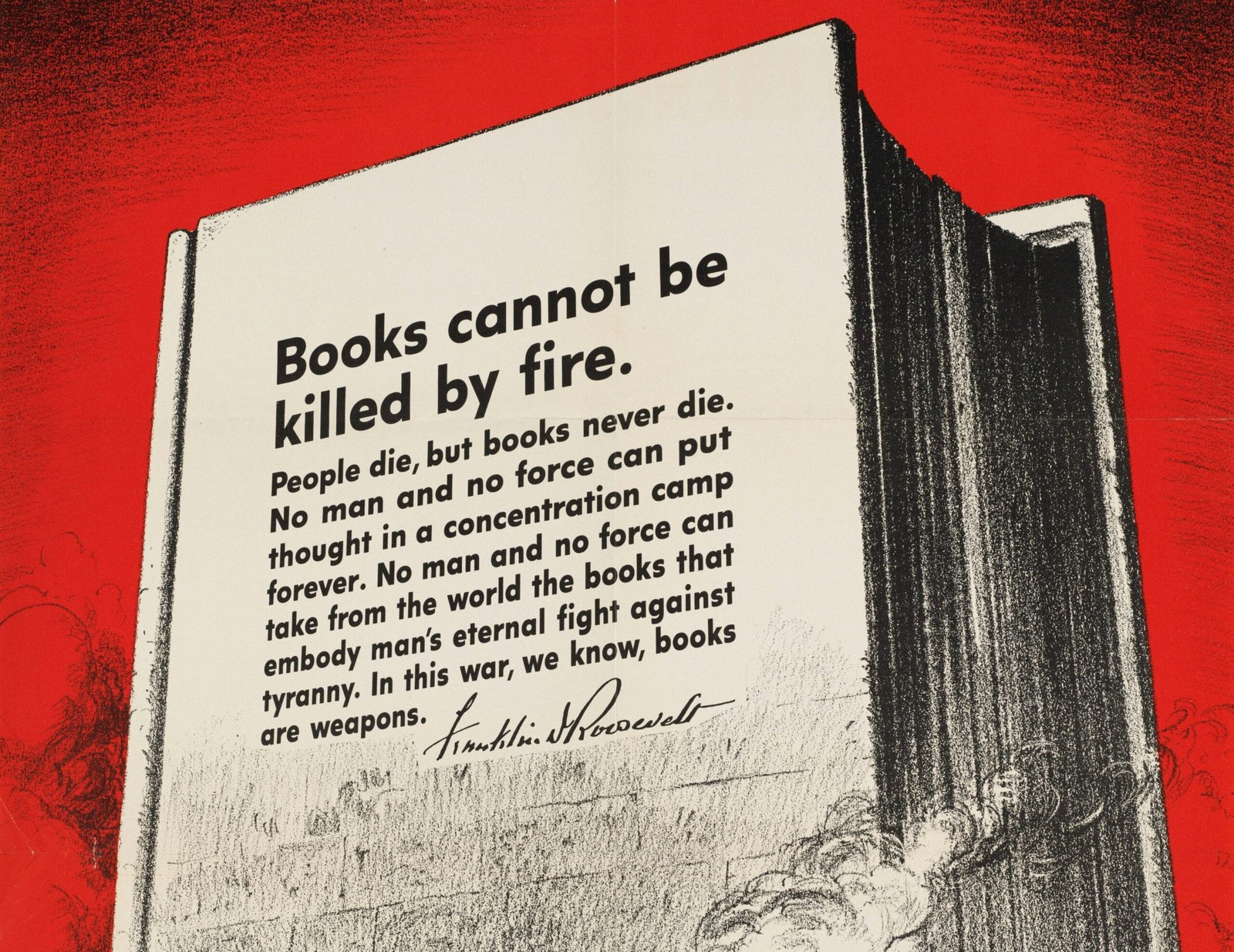
Since the 1930s, the medium has been dismissed as cheap, low-value entertainment, and every few decades that contempt has turned into full-blown hysteria. But, by the 1940s, comic books had become one of the most popular forms of entertainment in America. Millions of children read them every month. However, their popularity also attracted critics.
Critics said comics made kids worse readers, dulled their appreciation of real art, or that it pushed them towards delinquency and violence. Those claims spread through popular magazines, parent groups and town meetings. In some places, youth groups bought up every comic in town so they could burn them in public.
The fear was never really about the images on the page. It was about what adults thought the stories were doing to their children. For many Americans, comic books had become a symbol of everything they believed was wrong with modern youth.
The Man Who Lit the Fuse: Fredric Wertham
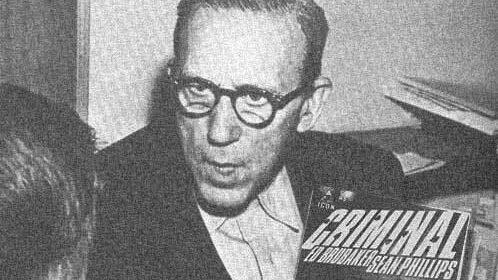
This crusade needed a credible face, and it got one in psychiatrist Fredric Wertham. Ironically, Wertham was not just some fringe activist. He was a serious clinician who fought the stigma around children’s mental illness, argued that poor and mentally ill defendants deserved fair trials, helped found the low-cost, non-discriminatory psychiatric center in Harlem called the Lafargue Clinic, and his research on the harm segregation did to children also contributed to the case Brown v. Board of Education.
It was during his clinic work that he began tying juvenile delinquency to comic books. His first big public shot was a Ladies’ Home Journal article titled “What Parents Don’t Know About Comic Books,” followed by his 1954 book Seduction of the Innocent, which became a national sensation.
Although much of the book’s evidence was later challenged, Wertham argued that comic books encouraged violence, promoted anti-social behavior, and contributed to juvenile delinquency. Wertham drew his conclusions from at-risk kids, used no control group, and ignored the many adults who read comics without incident. He claimed that Batman and Robin represented a homosexual relationship, Superman promoted fascist ideals, and claimed crime comics functioned as instruction manuals for young criminals.
Most historians now treat the book as junk science, but the headlines it earned were real, and they got Wertham in front of Congress.
The 1954 Senate Hearings
The U.S. Senate Subcommittee on Juvenile Delinquency took up the question of whether comics were driving kids to crime. The hearings drew enormous press coverage, and the coverage went badly for the industry. Whatever the testimony proved, the public took away one idea: comic books are the problem.
While Congress ultimately stopped short of direct federal censorship, the damage had already been done. Public opinion increasingly turned against comics, and publishers feared government intervention was inevitable.
The stigma stuck to the people who made them, too. Working cartoonists and writers started dodging the question when asked what they did for a living, because “comics” had become a profession people whispered about. Publishers saw where this was heading. If they didn’t clean house themselves, the government might do it for them.
The Comics Code Authority: Censoring Themselves
In September 1954, publishers formed the Comics Magazine Association of America (CMAA) to answer the outcry over violence, crime and horror in comics. They hired New York magistrate Charles F. Murphy, a juvenile delinquency specialist, to run the new Comics Code Authority (CCA). Murphy built the code on an older, mostly ignored industry code from 1948, which itself was loosely modeled on Hollywood’s Hays Code.
The goal was simple: look responsible, head off government regulation, and keep comics on the racks. It worked on the first two counts. Twenty-eight of the thirty-one major publishers signed on, together putting out about 75% of the roughly 60 million comics sold each month.
Every book was reviewed before it shipped, and approved issues carried a seal reading “Approved by the Comics Code Authority.” Problem issues were edited or rejected. In practice that meant limits on violence, restrictions on horror, no glorifying criminals, respect for authority, and good always winning in the end.
The effect on storytelling was heavy. Horror and crime comics were nearly wiped out. Publishers leaned back on superheroes, romance, or other stories that could survive under the code. But creators found it hard to write anything with real-world grit without triggering the Code’s restrictions.
The Damage
According to David Hajdu’s The 10-Cent Plague, the comic book industry suffered immediate and devastating consequences in the wake of the Senate hearings and growing public backlash. The number of published comic titles fell from roughly 650 in 1954 to just 250 by 1956, and more than 800 comic book creators lost their jobs.
The creation of the Comics Code Authority did not end the pressure on the industry. Across the United States, lawmakers continued introducing legislation aimed at restricting or banning comic books. By the fall of 1955, comic book laws had been passed in thirteen states, including California, Connecticut, Illinois, Maryland, Montana, Nevada, New Jersey, North Carolina, Ohio, Oklahoma, Oregon, Texas, and Washington. Similar proposals were introduced, debated, or stalled in nine additional states.
Many of these laws and ordinances were eventually overturned or proved difficult to enforce, but their existence demonstrated how widespread the moral panic surrounding comic books had become. In some areas, including parts of New York, Connecticut, and Maryland, comic books were temporarily banned outright.
Between the Senate hearings, the adoption of the Comics Code, and a wave of state and local legislation, the mid-1950s became one of the most significant periods of censorship in the history of American popular culture.
How the Code Finally Died
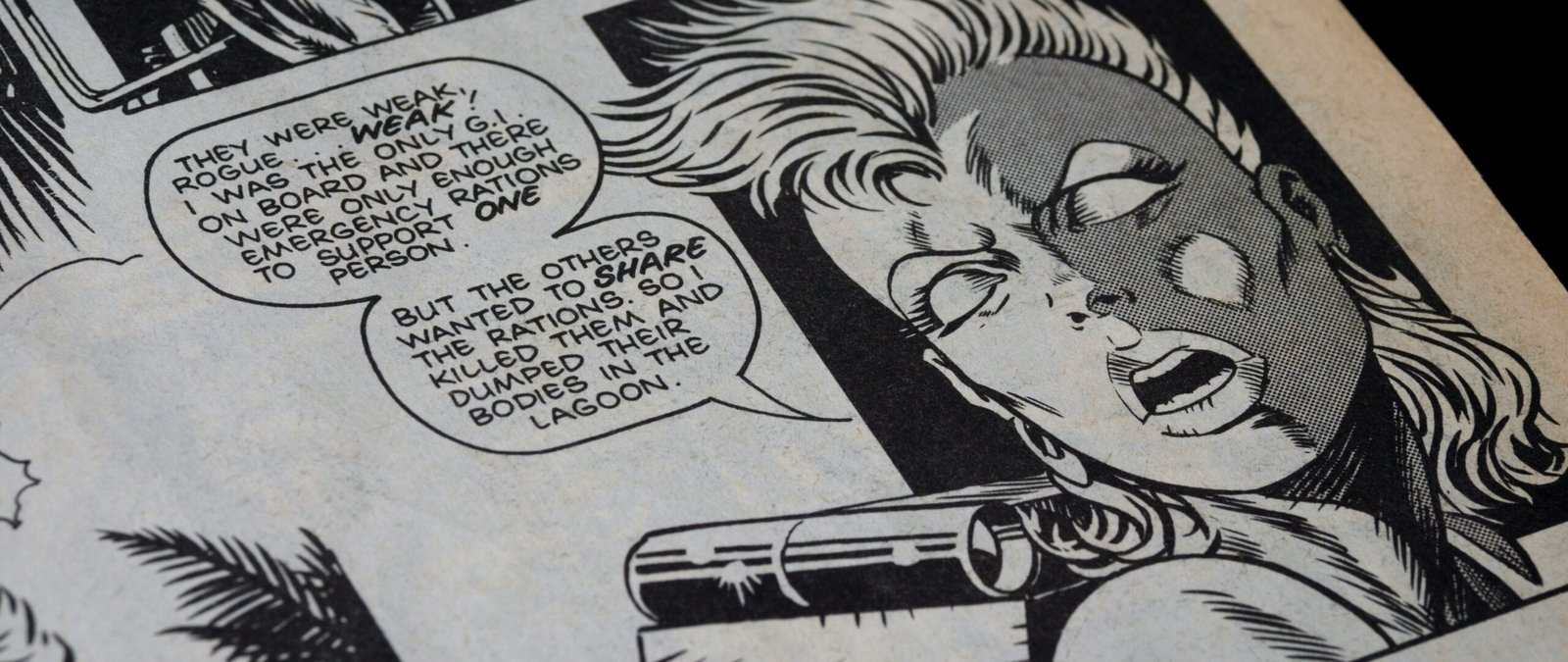
The Comics Code Authority did not disappear overnight. Beginning in the 1970s, pressure from publishers and changing cultural attitudes forced the Code to loosen many of its original restrictions. Major revisions in 1971 and again in 1989 allowed content that would have been removed under the original rules.
At the same time, the comic book industry itself was changing. The rise of the direct market and comic book specialty shops meant publishers no longer depended on newsstands, where the CCA seal had once been considered essential. Independent publishers also proved that comics could succeed without Code approval, further weakening its influence.
The final blow came when the industry’s largest publishers abandoned the system altogether:
- 2001: The CCA demanded changes to an issue of X-Force. Marvel responded by withdrawing from the Code and creating its own content rating system.
- 2010: Bongo Comics quietly stopped using the Code.
- January 2011: DC Comics announced it was leaving the CCA and adopting a rating system similar to Marvel’s. Archie Comics, the last major publisher still participating, followed the next day.
By that point, the Comics Code Authority had become largely irrelevant. Retailers no longer relied on the seal, advertisers paid little attention to it, and many newer publishers never joined in the first place. Once DC and Archie departed, the Code effectively ceased to exist, and the rights to the historic seal were later acquired by the Comic Book Legal Defense Fund.
In the end, the Comics Code Authority survived for more than fifty years, but changing audiences, new distribution models, and publisher independence accomplished what decades of criticism could not: they made the Code unnecessary.
Why It Still Matters

Looking back, the story of the Comics Code Authority is a reminder of how quickly fear can shape public opinion and influence policy. Comic books were blamed for social problems they did not create, questionable research was treated as fact, and an entire industry was pressured into censoring itself.
The consequences extended far beyond what appeared on the page. Publishers closed, creators lost their jobs, and comics spent decades fighting the perception that they were a lesser form of art and literature. Even after the witch hunt ended, much of that stigma remained.
The debate itself never truly disappeared. Questions about what books, films, and other forms of media should be available to the public still continue today. While the targets may change, the underlying conflict between creative expression and censorship remains much the same.
That is why organizations like the Comic Book Legal Defense Fund continue to play an important role. By defending the First Amendment rights of creators, publishers, librarians, retailers, and readers, they help ensure that stories are judged on their content and artistic merit rather than on fear, misunderstanding, or political pressure.
The Comics Code Authority may be gone, but the lessons of that era remain as relevant as ever. The greatest lesson is not that comic books were dangerous. It is that censorship often begins when fear is allowed to determine which stories deserve to be told.
Sources
- Syracuse University Libraries. The Comics Code Authority. https://library.syracuse.edu/blog/the-comics-code-authority/
- Comic Book Legal Defense Fund. The Comics Code of 1954. https://cbldf.org/the-comics-code-of-1954/
- Comic Book Legal Defense Fund. Comics Code Revision of 1971. https://cbldf.org/comics-code-revision-of-1971/
- Comic Book Legal Defense Fund. Comics Code Revision of 1989. https://cbldf.org/comics-code-revision-of-1989/
- Wikipedia Contributors. Comics Code Authority. https://en.wikipedia.org/wiki/Comics_Code_Authority
- Princeton University Library. Comic Books, Censorship, and Moral Panic. https://universityarchives.princeton.edu/2018/04/comic-books-censorship-and-moral-panic/
- Comic Book Legal Defense Fund. History of Comics Censorship, Part 1. https://cbldf.org/resources/history-of-comics-censorship/history-of-comics-censorship-part-1/